Mountains and Rivers

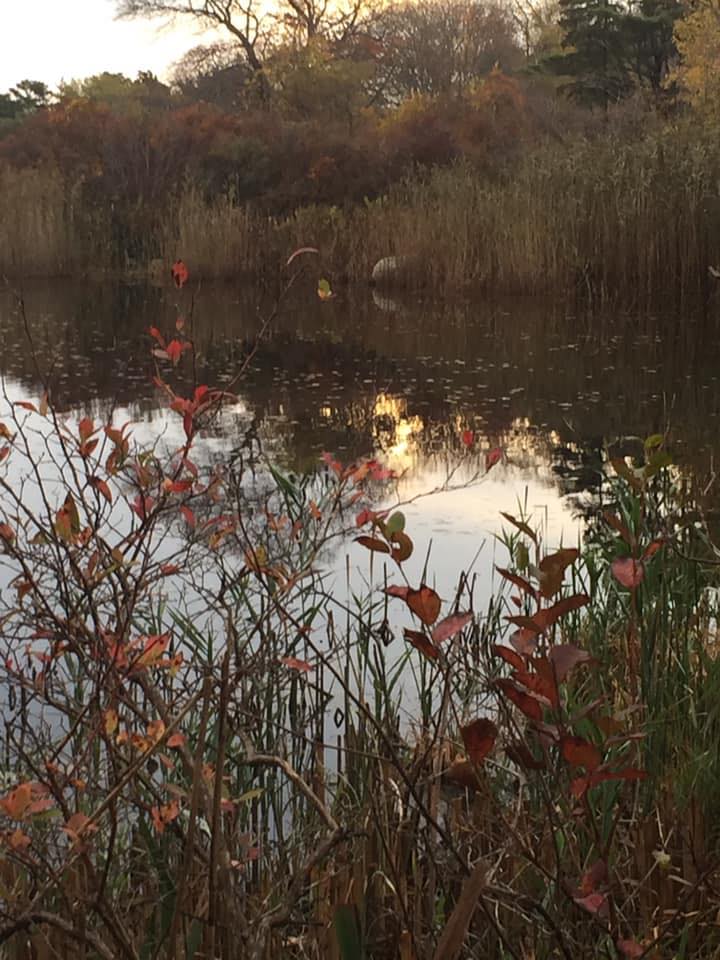
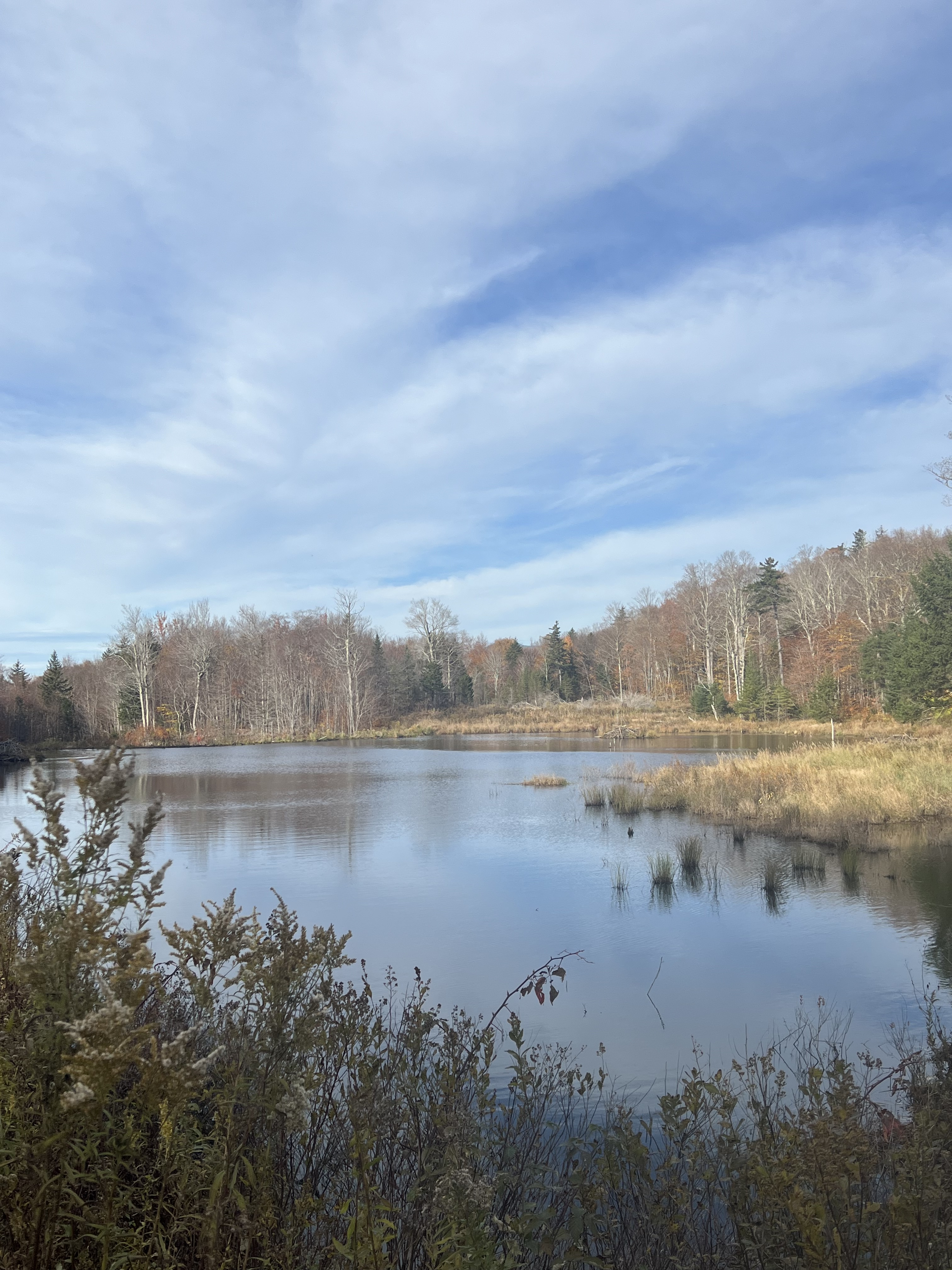
It’s November, late autumn, season of shedding and letting go. One of my spiritual teachers told me years ago, “wisdom is knowing what to take up and what to put down.” Or perhaps another way of saying it is, where to put one’s attention, or energy, or awareness. I’m sure wisdom is more than that, but I’ve loved the image of picking up something, whatever it may be, and putting something else down, or letting go. Right now, the beavers in this bog in the photo above are literally picking up sticks and logs to prepare for winter, and swimming with them through the water to their lodges at the far end of the beaver pond. Though you can’t see them doing it in the middle of the day. There’s a great wisdom living in them—the beavers—they are worth contemplating as teachers of creative adaptation, perseverance, enjoyment of their habitat. I’ve had the privilege of visiting this family for a year now. They, the beavers, are starting to prepare for winter and activity is slowing down though the branches and twigs of their winter stash keep increasing. I will miss them during their winter slow down. They don’t hibernate, it turns out but they do slow down.

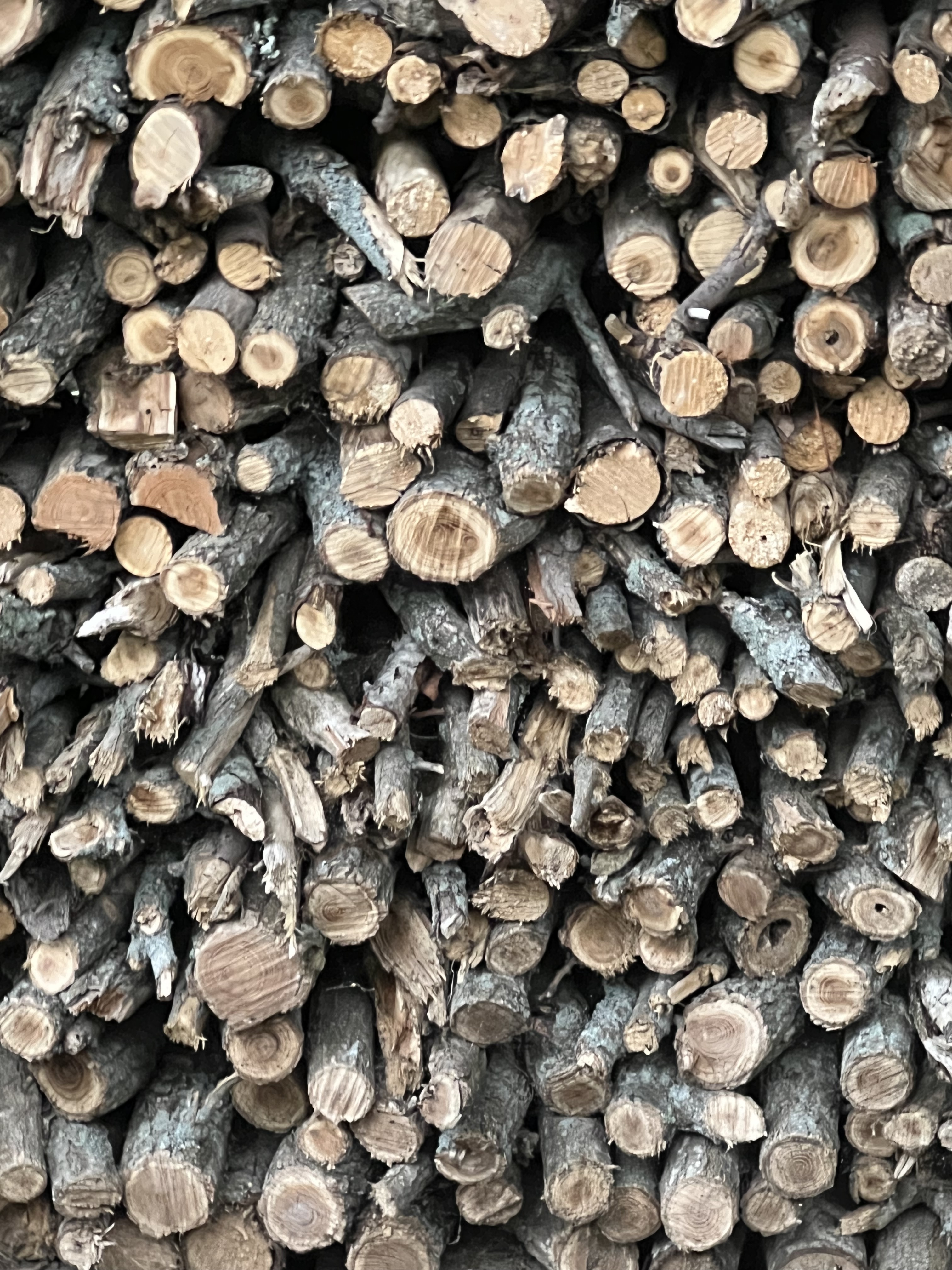
Another friend, who lives in a woodsy place, loves clearing up sticks and twigs in her yard, especially in this season. Her woodpiles are much neater than the beavers. But she too, has mastered the art of knowing what to pick up and what to put down.
Four autumns have passed since my late husband, Willy, died. So much of grief is about learning and relearning over and over what to pick up and what to put down. The spiritual teacher who gave me that piece of wisdom about wisdom was Sumati Marut, aka Brian Kelley Smith, a lion’s roar of a man and teacher and friend. He was at home in Christianity, Buddhism, Hinduism, a comparative religion scholar and joyful lover of life. He became Willy’s friend, which was wonderful for them both. He died, sadly, a couple of years before Willy. The sixth anniversary of his death was October 19th, autumn here, spring in Australia, where he lived. But I think of them both, the two big hearted, great spirited men, smiling at each other with so much love, and laughing and laughing. I am grateful for the remembered laughter, the joy in life, and the straightforward wisdom of doing what needs to be done, right in front of one. I think of the reading from Ecclesiastes so often read at funerals, “to everything, there is a season, and time for every purpose under heaven.” The beavers I watched all year seem to know that instinctively. Once there was a terrible rain storm here that damaged one of their lodges. The next day they were out repairing, slowly, stick by stick, mud pat by mud pat, their home, with care and gentleness. Not arguing with the rain or the heavens, or the mess, just knowing what needed to be picked up and what needed to be put down. Marut would say, “It’s like this now.”

The Blueberries Are Not Yet Ripe

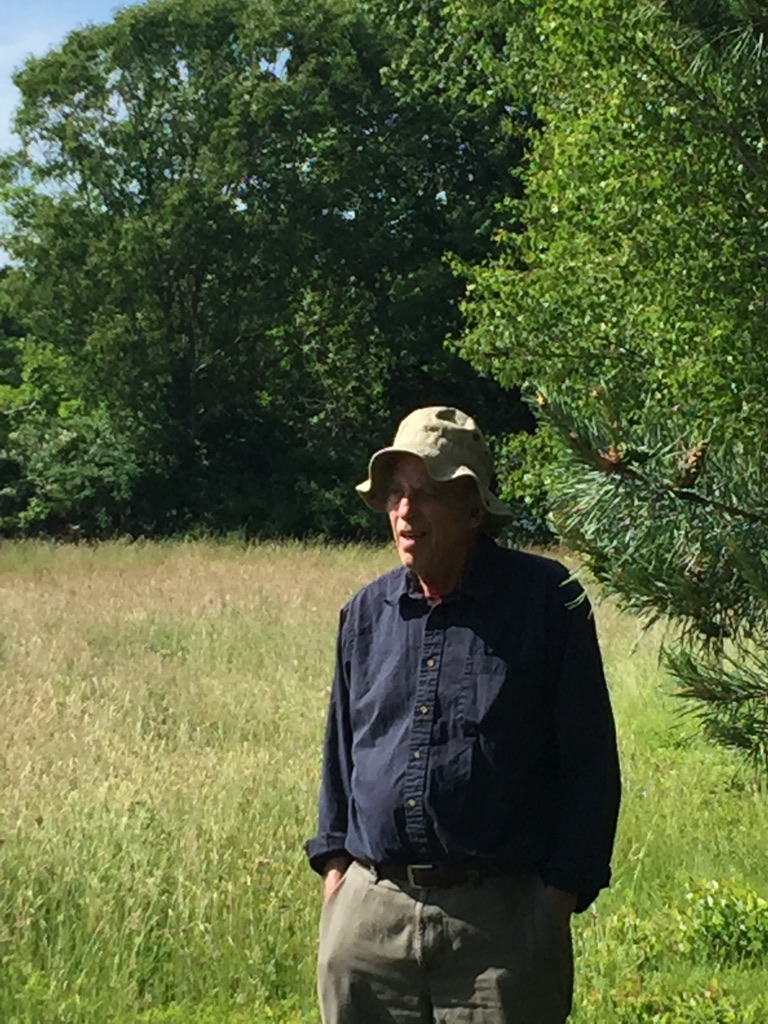
Beautiful Willy last summer in the field out back.

It’s mid-June, and the blueberry bushes have flowered, petals fallen, and tiny green berries have begun to take shape. These will ripen about mid-July, but my beautiful husband Willy is not here to pick them, to celebrate them, to put them on his oatmeal and enjoy their tart “wake-up” taste on his tongue. He died four days into Passover, on April 19th, two days after Easter. There was a rainstorm that morning, and startling thunder. Later that afternoon, our Rabbi told me it is said that it always rains when a zaddik dies.

On Sunday it will be two months since his death. I hardly know how to write any more. I had kept up with our Caring Bridge entries, even writing a final one a few days afterwards, but I’ve not written much since then. I’m writing this because I’m stunned by how little I understood the grief of spouses whose beloved has died. I’d been a pastor long enough and accompanied enough people in mourning to know the loss of a partner/spouse is devastating, to know there is nothing else like it, to know how it rips the psyche and the body apart. Even a peaceful death, as his was, is still a death–and heart-rending is not too strong a word. Even if it was expected, as his was, there was nothing that could have prepared me for what would happen afterwards. I had no idea I could hurt so much and still be breathing. If I ever go back to serving a congregation, I will have so much more awareness of the effort it takes a surviving spouse to keep going, and I will take so much more care. I am so sorry I did not realize the depth of that invisible pain.

Mornings and evenings are the hardest time for me, at least: transitions of night into day, and day into night, those edgy times not quite light, not quite dark. When I wake up, I reach for his pillows. I haven’t washed them because they still retain a faint fragrant memory of him. He loved the dawn, the sunrise, and we both used to wake up early for the morning. Now when I wake, I try to remember to do what he did–to greet the light with a blessing–Baruch HaShem. Remembering how he lived each day, because he cherished life, has ended up being the greatest comfort. I get dressed because he would have wanted me to. Lately, mostly to honor his memory, I’ve been eating breakfast on our screen porch, listening to birds, wandering out to the garden to see how things are growing. He did that in the mornings in summer. I bring him with me, trusting that he’s using my eyes. At night, like many bereaved spouses, I have trouble falling asleep. For the first few weeks, I slept downstairs on the couch in front of the TV, watching endless replays of the Bridgerton series on Netflix. They were love stories with happy endings, but they are not the sort of shows Willy would have watched. I apologize to him for watching them now, but I mostly fall asleep in front of them. Eventually, the cats wake me up to go upstairs; they don’t like late night TV. The bed is daunting–so empty of him.

On the day after he died, visitors came to sit with me. On that first day, 15 people came, 11 of whom had lost their spouses. As my niece, who also lost her spouse, put it: they knew to come. In the weeks since his death, my friends who know this landscape of loss have shared their wisdom with me, much of which boils down to having patience with whatever is happening, being gentle with myself, taking care of myself, not expecting much of myself, and one-day-at-a-timing it. It helps to know that they’ve lived through this. And just their presence is a comfort. His good friends come and don’t mind my talking about him endlessly. They want to talk, too, and that’s a relief. I have no idea how to answer the question: how are you. I rehearse answers: I’m fine. I’m terrible. I’m not ok. I’m ok. Lately, I’ve landed on this: “I have no idea how to answer that.”

Today, this mid-June day-was truly a beautiful day, as only a sunny June day on Cape Ann by the sea can be. I can’t say I was happy–but I did find something nice to wear. I did make toast and coffee. I did manage to go to the bank. I did do a laundry. This morning because it was warm and a gentle wind blew, I took the newly washed clothes outside to hang them on the line. When we got married, Willy asked me what I wanted for a wedding present. I said I wanted a clothesline. He was shocked. He was thinking jewelry. But it was true. I love hanging clothes on a clothesline, and I hadn’t had one since my children were small. For some reason, a clothesline meant home to me, and of all the things in the world I wanted to do, I wanted to make a home with him, a loving home, a kindly home. So he made me a clothesline, sunk the posts, strung the rope, in a perfect spot that catches the sun near a big fir tree. We both loved putting the clothes out. When I put them out today, I didn’t cry after all, but smiled instead into the morning light, and thanked him for the clothesline, for the home we made together, and the home that he was and is for me.

Blueberries for Breakfast-July 11, 2021

Wild Blueberries next to our house.

Yesterday marked a year since my husband was diagnosed with a brain tumor, one of the not good kind. I think that I’ve written here a few times since then, I believe, reflecting on some of the changes that have happened. The year and-a-half of the pandemic was marked by loss for us, as it has been for so many, with deaths of friends and family, some expected, some not, some from long-standing illness, one from Covid. The brain tumor was one more surprise of this year. I’ve been using Caring Bridge, mostly, to update friends and family of what’s happening every month regarding his treatment and state of being. So far, he does well.

I’m finding my way every day with whatever presents itself. We are living so close to the minutiae of daily life, in part, because attending to the care of someone living with a brain tumor requires that–attention to the minutiae: what will be the challenge of the day, how is the fatigue, is there enough protein in the house, can we go for a walk, or what music will wake up the brain, what healing things can we do. It’s not that we speak of these out loud every day, though some days we do. The many considerations are under the surface all the time. Every day, there are things and events that move us to tears, whether it’s in the immediacy of our personal life–like a grandchild’s sudden smile–or in the public sphere, the ongoing pandemic, the threats to democracy, the suffering of so many people and creatures, the losses of habitats, the droughts, fires, floods, storms. But next to that, next to those tears, is beauty–so jarring to live with both, the suffering and the beauty, every day, and to learn each day to expand the edges of compassion, to keep my seat and bear witness, to act, if I can, in ways of weaving justice, which is very limited right now, and to keep loving.

I went from a very public life as a pastor and community religious leader to a very hidden life. There’s relief and loss in that. Relief for being able to put down some responsibilities, and loss for being able to put down some of those same responsibilities. I miss my public life and our lively community, and I cherish this new very familial and private one.

In this hidden life, courage and perseverance have become the loving virtues that shine most brightly to me, mostly my spouse’s immense courage and devotion to living the fullness of existence. And in the wider world, the courage and perseverance of so many people working to create a better world, who never give up the work of hope and justice. On the small scale, our home scale, the virtues are the same. Why do I rise in this morning? How will I live this day, how will I love, how will I serve?

Today in our hidden life, my beloved went out early in the dawn to pick wild blueberries. It’s a beautiful morning, very mild, post tropical storm Elsa. Picking blueberries is not an easy thing for him. His balance is uncertain on uneven ground, so he has to find a way to set his feet on the granite and moss without feeling like he might fall over. His right hand hand isn’t working very well, from the tumor, so sorting through leaves and picking the berries off takes great concentration. “I dropped quite a few” he reports when he comes in, “good for the birds.” While he was picking, the catbirds talked from the birch tree, and a chickadee dropped into the bushes to feed on the berries, just a foot away from his gentle hands.

Later, we made oatmeal, and ate the berries. I haven’t presided at a communion service since March 15, 2020, when we closed our building. And in October, I left my call to be able to be here at home. But these blueberries, this oatmeal, this beautiful morning, these loving hands that picked the blueberries, the birds in the birch trees, the wet ground, the drift of cloud, my spouse lifting his spoon carefully, this moment, this, too, a communion.

Advent Week 1 2020

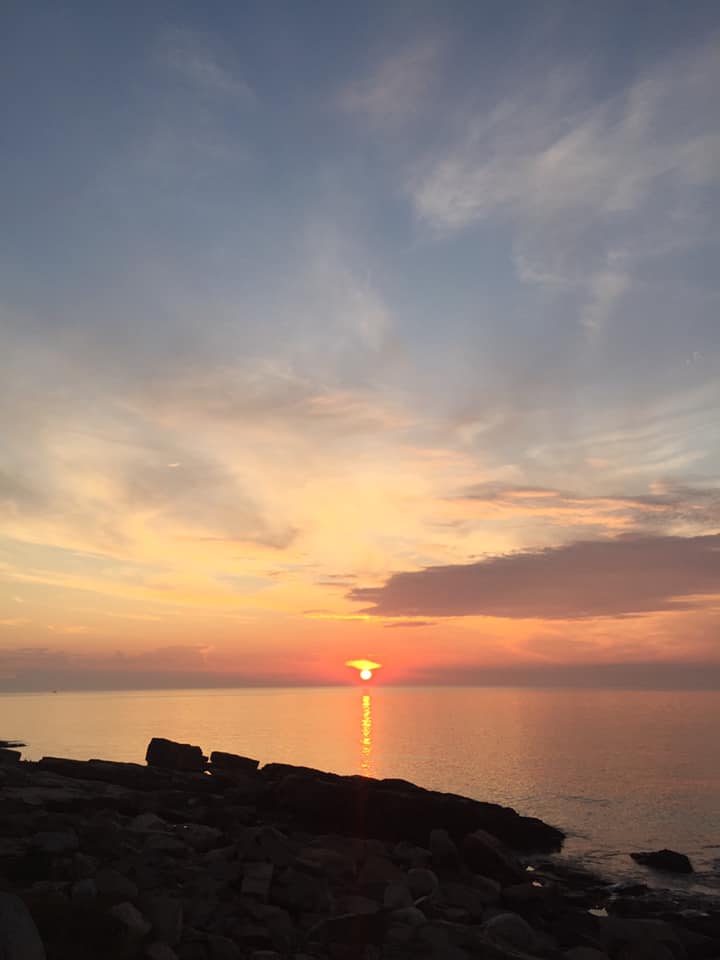
I woke up very early on November 29th with a pressing need to watch the sunrise down the road. We live near a road called Eden, which seems appropriate given the spectacular view of the ocean at the edge of the rocks. Where the water meets the granite, there are endings and beginnings, much like this season of Advent, which begins with Jesus preaching of endtimes, and Isaiah calls on God to rend the heavens and come down. I could do with less apocalypse this year, since we’ve already had so much of it, but it’s an ever-present reality, apocalyptic possibilities–I don’t need to name them; just turn on the news.

A confession: this week, I’ve felt the profound loss of no longer working in a parish. I am homesick for church, like everyone else in the pandemic. I miss every bit of the Advent preparations: the going up to the attic to look for the candles, scrabbling in the sacristy, finding greens for the wreaths, do we have enough candles, where are the stars, everything we usually do, which we’d be doing if not for a pandemic. But even in the pandemic, I miss the tasks and preparation, the pondering of scriptures, the thinking, the conversations, the wondering what good word do people need to hear this year, what good word do I need to hear, the wondering how to do another on-line service with integrity and care, and the frustration of feeling so much without being able to see people in person. And now, there’s a further distance in leaving my congregation, for this strange pause I’m calling retirement, but which is really a time out to be with my husband. One of the secrets of parish ministry they don’t tell you in seminary: they don’t prepare you for how much you end up loving your congregation, your people, your flock, your lambs. Because that really happens–it’s a gift, too, from God, because it’s a kind of huge love, this love of the church, not just for one’s own congregation, but a great love of the church universal, the people of God, the body of Christ embodied everywhere, in every place and time. I have no words for it, just love. And it isn’t a personal love; that is, I couldn’t come up with it on my own–it’s a grace, “unexpected and mysterious” as Jan Lindholm says in her hymn (ELW 258). And I suppose the reason I needed to see the dawn this first Sunday in Advent is I need to see the promise of this season, the hope of this season, and remember, and embody, in my life now, with it’s changed orientation, this wild love of God’s people, whether I am serving a congregation, or bearing witness to my spouse as he meets the demands of living with brain cancer, or praying by the ocean on a cold morning in November.

November Thin Places

My soul feels thin, this season. All Saints, visitations, All Souls’ remembrances, lengthening nights, the light receding, thin, stretched, a veil, a thin place. I’m a thin place. And like the landscape changing around me, so much is shedding, turning colors, drying up, drifting down, settling somewhere, I don’t know where. So much death, so much grief now, every day with the Coronavirus, so much helplessness against the hardened hearts of foolish leaders, and their incessant lies. There’s solace in the land, the earth, the sky, and changing light, as long as I don’t think too immediately of climate change, and wonder about which species are dying off today, which village is under water, which forest on fire, which earthquake, in what country. Overwhelming, and my soul is thin, too thin.

The strange comfort is living with someone with brain cancer so far has been luminous. Maybe we are both becoming thin places. His spirit is full of light. He is full of joy, and is not in pain. We both thank God for that, as well as good medicine and good science, and good doctors. Every day is different, some soft and gentle, others harder, depending on the chemotherapy cycle. Family and friends come and sit or walk, sometimes with gifts of food, or help with shopping. So far we’ve been able to be outside, though it’s colder now, and like most people we are wondering how to manage seeing others. Most days, I am quiet in myself, and for that I am grateful, too. The big decisions have been made already. Perhaps that is a gift of the thin season of November, too, of winds sweeping leaves away, and then great stillness, of lowering skies, and bright winter birds returning: the juncos arrived the other day. Grebes and mergansers are back. Tonight, a thin moon followed the sunset, a curve of silver, catching the last of the evening light.

Nine Months Later

The last time I wrote was nine months ago, in the season of Christmastide. Not long after, in mid-February, my mother died. At 98, she had lived a full and invigorating life. She was, however, not interested in dying. Her nurse tried to get her to discuss the matter as she approached that passage. On the last day of her life, the nurse asked her whether she was prepared for what was about to happen, “Are you ready?” My mother answered simply, “no.” She became ill around this time last year, and caring for her became a focus for the autumn and winter. She was very close to her two younger brothers, our sweet and cherished uncles, one of whom had died a few years ago. At Thanksgiving time, in 2019, her second brother died. She lasted a few more months. She was an intensely political person, very concerned about the direction of the country. She was an advocate and activist for many worthy causes, affordable housing, health care, education, voter rights, women’s equal rights, Civil Rights. She worked in local politics and volunteered in national politics; she was a longtime member of The League of Women Voters. She feared for the outcome of the next election, knowing full well the dangers and reality of international interference in fair elections. We often thought, in addition to loving her family, she might have been wanting to stay alive to vote in 2020. Once she achieved the milestone of 98, we thought she might try for 100.

We had decided on a memorial of May 9th, the Saturday before Mother’s Day. Shortly after her death, the Covid19 pandemic escalated, and soon many people were working from home, practicing social isolation and distancing, and other Covid related measures. My vocation as a pastor changed dramatically, as our church learned to become an on-line congregation, an arduous learning curve for many religious leaders.

Easter and Passover came and went, then Pentecost and Shavuot. Now the High Holidays are approaching; this week, in fact, the Days of Awe begin. In mid-July, my beloved was diagnosed with a brain tumor, and our lives changed again, rapidly. About a month after his biopsy, he began chemotherapy. It became clear, again rapidly, my work life could not accommodate the needs at home. After several heart-wrenching weeks of prayer and discernment, I decided to retire earlier than I had planned. I am not comfortable with the language of retirement, so now, I might say, my vocation has shifted its focus to my primary call which is my family, and in particular, to spend time with and care for my nearest neighbor, my spouse.

Mortal illness in a family member or in oneself has a clarifying effect on what needs doing. My husband and I do not know how much time we will have together, now. We are wanting each day to matter, to be lived as fully and completely as possible. We had always wanted that, but embracing the truth that the fullness of existence is right in front of us is more important than ever. I will probably write more on this blog as time goes on. In the meantime, I am greeting each day with gratitude, even days like today, when my body hurts with unshed tears, for us, for the nearly 200,000 dead from Covid, for the losses and ongoing fires on the West Coast, for those endangered from the incoming swath of hurricanes in the Gulf, for those harmed and killed by continued and merciless racist violence, the weight of sadness from this last year in my own life. I am a teardrop. I breathe in and I breathe out. My husband is upstairs working as best he can. The room is full of morning light.

What will the new year bring? May it be a sweet one. L’Shana Tova

Christmastide/Jesus’ Baptism

On the eve of the baptism of Jesus, I happened to discover a poem of Denise Levertov’s called On the Mystery of the Incarnation. The first lines struck me, because I feel like I’m living in a time when I see our species doing its utmost to destroy our planet. I was trying to find a way to preach about Jesus’ baptism, and also acknowledge the current suffering of our world, not just our species, but all species, the earth itself, between massive fires in Australia, earthquakes in Puerto Rico, floods, storms, war, threats of war. Levertov’s poem opened like a pause in a litany, a breath, a rest, an epiphany all its own, a bit of light in the darkness. I’m grateful for that.

Denise Levertov (1923–1997)

On the Mystery of the Incarnation

It’s when we face for a moment
the worst our kind can do, and shudder to know
the taint in our own selves, that awe
cracks the mind’s shell and enters the heart:
not to a flower, not to a dolphin,
to no innocent form
but to this creature vainly sure
it and no other is god-like, God
(out of compassion for our ugly
failure to evolve) entrusts,
as guest, as brother,
the Word.

baptismalwaters

Mary and Viriditas

IMG_7596

Last year in March, we traveled to the Brooklyn Museum in search of this painting. It is called The Virgin, by Joseph Stella, (American, born in Italy, 1877-1946), and it was part of the museum’s exhibition on “Infinite Blue.” Briefly,

“The works of art in Infinite Blue feature blue in all its variety—a fascinating strand of visual poetry running from ancient times to the present day. In cultures dating back thousands of years, blue—the color of the skies—has often been associated with the spiritual but also signifies power, status, and beauty. The spiritual and material aspects of blue combine to tell us stories about global history, cultural values, technological innovation, and international commerce.” From the Museum website.

I went to Infinite Blue because wanted to see this depiction of Mary, one of the most captivating images of her I have ever seen. I first came across it a few years ago when I was searching for icons related to Hildegard of Bingen, and like Elizabeth in the Gospel of John, my heart leapt when I encountered her. I’m guessing that this particular Mary appeared in the gallery of images because of the abundance of growing things, surrounding, entwining, embracing her, the figures of flowers and vines embroidered on her clothing, the circle of blossoms where Jesus will be…Hildegard’s “viriditas” “greening” is everywhere in this painting. I haven’t looked at the history of this work, so I have no idea if Joseph Stella intended the “viriditas” connection. But what this icon has done is change my experience of Mary. She is always a source of life, carrying the divine within her. She is a garden, here, of earthly and heavenly delights, of beauty and wilderness, of fecundity and blossoming. This is imagery I usually associate with the incarnation and the Tree of Life. There’s no reason Mary shouldn’t be a part of that. I had just not seen it in quite this way. Here, Mary herself becomes a tree of life, which I suppose every woman is: not a Mother Earth, which is always the temptation with Mary, or a representation of the goddess, but a woman who bears and brings and carries life. Stella depicts her as serene, peaceful, but also, I think as holy possibility, that moment after or before or in the midst of her “yes.”  This Mary is born of the beauty of earth, and the divine manifests in and through the beauty of earth, the necessity of the material. Like all icons, Stella’s Virgin is a window into a perception of the holy, here entwined in, and arising from, the lavish blessing of creation.  I wish I could thank Joseph Stella in person. But perhaps he knows already.

Holy Week 2019

chagall2764

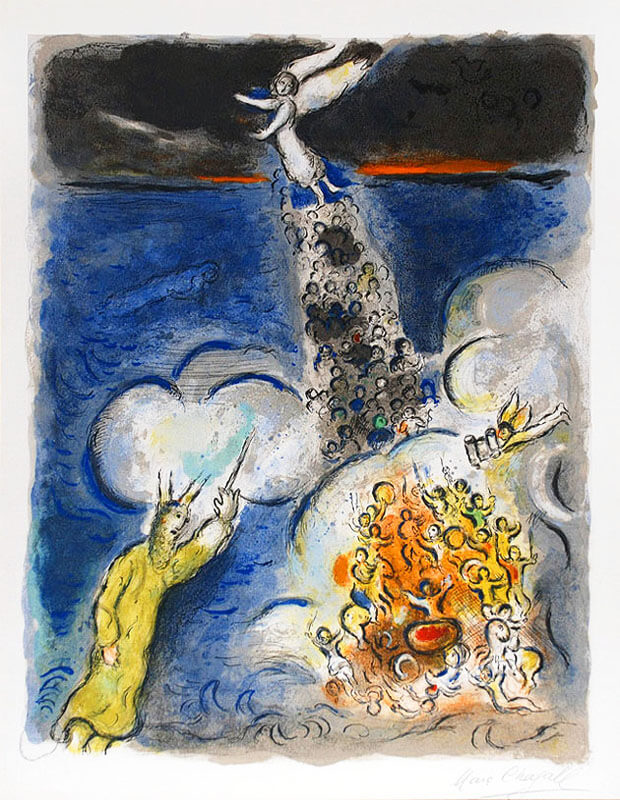
The first night of Passover is also Good Friday this year. It seems appropriate. Our family is both Jewish and Christian, and we try to observe as much of our mutual holidays as we can. For me, as a pastor, the double observances deepen my understanding and devotion during Holy Week, where the resurrection is linked to the ongoing action of a God who is committed to liberation wherever there is oppression, whether from struggles within myself, or from external, systemic forces. The power of the Exodus story, next to the Crucifixion brings me to prostration every year.  This year, for many reasons, Holy Week, for me, is all about liberation, naming the powers, unmasking them, and interrupting the destructive force of hatred. The Cross is the Holy Intervention, as we would say in pastoral care, a life-giving intervention, a life-saving intervention.


Wednesday in Holy Week-2018

revannecapeann's avatarSt. Paul Lutheran Church

The palms and procession are over. We are mid-week in Holy Week, the day before the Triduum begins, the Great Three Days. Wednesday in Holy Week, at least for me, feels something like Holy Saturday, a day of waiting, knowing that the rest of this week will be lived within the great drama of the Passion of Jesus, and the Resurrection. I usually have at least one sleepless night in Holy Week, and tonight is that night.

This summer, I had the privilege of taking a 30 day silent retreat at Eastern Point Retreat House. The retreat was based on the Spiritual Exercises of St. Ignatius. Each week of the 30-day Ignatian retreat is spent on different aspects of the life and ministry of Jesus. The final days are spent on the The Passion of Christ and the Resurrection.  Part of the structure of the 30-day retreat is meeting every…

View original post 564 more words